


I think I can handle most anything as long as I have cotton next to my skin. What do you think? What are the likely fashion trends of the future?
Be seeing you!
Agent Z.
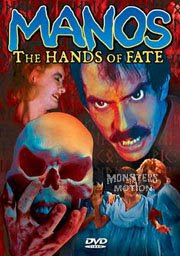 Much as we’d all love for science fiction romance to become an overnight sensation, the actual scenario is about as likely as a big budget Hollywood remake of MANOS: THE HANDS OF FATE.
Yet even an appallingly bad film such as MANOS gained a cult following, thanks to its propagation through home video, the Internet, and MST3K. Rather than an explosion of fame and fortune, SFR is more likely to gain popularity at the rate of a slow, steady growth.
A crying shame, I know.
However, I can’t emphasize enough how beneficial digital publishing is for SFR. Digital releases have strong potential to influence the direction of the genre. Digital publishing offers more creative control for authors. Readers get the variety they crave.
Digital mediums also have the potential to deliver content in non-traditional ways—ways that can attract new readers (and connect them with different genres). Not only that, but ways that adapt to our often hectic lifestyles.
Here’s another reason why I’m encouraging authors and readers to embrace SFR going digital:
In a recent io9 article, The Best Way To Break Into Science Fiction Writing Is Online Publishing, author Michael Stackpole “…is convinced that both established and fledgling authors need to embrace new content delivery methods or fade into irrelevance. In fact, he offered evidence that digital publishing will not only be necessary for authors, but that it will work in their favor.”
And Mr. Stackpole also had this to say: “Rather than simply changing the method of delivering stories to readers, Stackpole believes digital formats will change the nature of the stories themselves. At the very least, authors should tailor their work to these new mediums. He cited what he referred to as "the commuter market," people who read two chapters per day on their half hour train ride to work. It's an ideal market for fiction broken into 2,500 word chapters, and could presage a resurgence of serial fiction. "It's kind of like a return to the Penny Dreadfuls," he said. "But the readers today are more sophisticated, so we as writers need to put more work into it"” [emphasis & link mine].
In a post at Scorched Sheets highlighting the key items of the Rogue Digital Workshop, it was noted that Kassia Kroszer made this prediction regarding digital content:
“Possible trend toward chunked content [definition note: chunked content is selling book piecemeal – in a way similar to itunes selling songs as well as full albums, consumers would be able to buy individual portions of a work, say a single poem or essay, or only one author’s work out of an anthology]
Subscription and serial content. This is currently experimental, but Kassia thinks it’s definitely coming” [emphasis mine].
And to pull it all together, we have this tidbit from Jane of Dear Author:
In a recap of the RWA ’09 conference, she shared that “I heard from more than one editor that they are tiring from the sameness of submissions and are looking for something, ANYTHING different.”
All of the above represents yet another opportunity for science fiction romance to make its mark. The writing’s on the wall.
What do you think about serialized content for science fiction romance? (Should we dub them “Penny Wonderfuls”?!)
Joyfully yours,
Heather
In my Romancing the Blog post The Paranormal Puzzler, I discussed my beef about “the conflation of paranormal, fantasy, and science fiction romances under the paranormal marketing label.”
Well, I’m back on the soapbox again, but from another angle.
Paranormal romances are still going strong. Publishers request it—but what stories do they actually want? If science fiction romance counts as a paranormal romance, why aren’t we seeing more of these stories?
Even if defining cross-genre books like SFR as paranormal romances is only for the purpose of the submission process, it sends a mixed message at best and misrepresents a publisher’s intention at worst. It creates a rut for SFR in that authors (published and aspiring) who might write SFR don’t because publishers say one thing and do another. SFR and other types of paranormal romances are not mutually exclusive. Just because chocolate sells like gangbusters doesn’t mean strawberry ice cream won’t sell well, too. SFR is closer to strawberry than to some esoteric flavor such as beef stew ice cream (check out my comment for that post while you’re there). So why the differences in how SFR submissions are treated?
One issue I see is that horror-based paranormal sells well because somewhere along the line, the horror was removed from the equation. There are some great stories, but frequently, the horror element that differentiates them from traditional romances has largely been tamed to the point of being unrecognizable. Therefore, my guess is that publishers tend to evaluate them as a “safe” investment. Horror-based paranormal romances were once a risk; now they’re the sure thing.
With science fiction romance, this dilution hasn’t taken place. The science fictional elements have a strong presence, and authors experiment with gender roles in their heroes and heroines. And yes, weird and fantastical concepts abound in these stories. So a second issue is that while the above factors are what keep SFR fresh, they also might hinder a higher rate of acceptance regarding submissions.
It occurred to me that perhaps publishers are attempting to cast a wide net by using the term “paranormal romance” for submissions, but if writers are describing their work in terms of SFR or futuristic romance, what’s really the point? How would they necessarily know if paranormal means SFR/futuristic?
In response to my RTB post, Cora stated that “we also need a new umbrella term for the various genre-crossing novels that have appeared in the past couple of years. And paranormal romance is not it.”
I thought Cora’s statement was very thought provoking, and so I now turn the mike over to you. What do you think needs to change? Should publishers be more specific about their needs, or does everyone already know what’s being communicated? How should SFR authors label their stories when submitting? What might be an effective new umbrella term?
Joyfully yours,
Heather
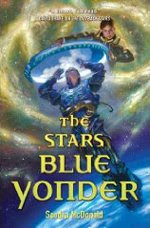 Welcome to the final installment of this week's special feature on author Sandra McDonald and her Outback Stars trilogy.
I'm excited to present an exclusive interview with the author. Read on to learn more about her creative process, anti-submarine warfare school, and Bollywood movies.
The Galaxy Express: THE OUTBACK STARS is a complex and richly detailed journey through time, space, and love. I imagine its development was equally labyrinthine. Please describe the evolution of the trilogy from story conception to publication.
Sandra McDonald: I wish I could say there was a grand plan, intricately designed, that guided the three books like the stars guide ships across the seas. Unfortunately, it's pretty much the opposite! Book one was written as a stand-alone, book two as a sequel, and then book three to resolve the quasi-cliffhanger of book two. At times wrestling the characters and plot has been like wrestling with an octopus – once I pin down one arm, another flings itself into the air. It's been exhilarating and exhausting. I don't recommend it, but at the same time, the sea is in my blood, and so I go back to it time and time again.
TGE: Approximately how much time, total, did you spend on research? What were some of your favorite discoveries?
SM: I don't specifically track research hours, but I'd imagine it was hundreds of hours spent between books, websites, and documentaries. I've had "The Fatal Shore" by Robert Hughes on my bookshelf for years and that's a great, classic resource for anyone interested in the history of Australia. "The Girl from Botany Bay" by Carolly Erickson really opened my eyes to the horrors convict women faced on their way to the colony, and the hardships they endured after landing. The National Library of Australia has an amazing digital collection that I used to read old newspapers and look at fashions, places, and people.
TGE: Was there any particular inspiration for the romance between Terry Myell and Jodenny Scott?
SM: I first started thinking about the book while I was an officer in the Navy – a single female officer surrounded by a lot of handsome enlisted sailors. How tempting! But fraternization was a big issue and could lead to court martial, as it did for a classmate of mine from anti-submarine warfare school. I knew that I wanted to make that a central part of the story – the tension between what the heart wants, and what military regulations insist on.
TGE: Were there any challenges/obstacles regarding integrating a romance with the military and indigenous Australian mythology elements?
SM: Integrating a romance with the military was easy. Integrating Australian mythology itself is the harder part. The Indigenous people of Australia have many different myths and customs that often compete with one another, and I didn't want to offend any one group by using only the details of another. So that was a balancing act.
TGE: Do you have any favorite SF&F books featuring stories with a framework other than, as you once put it, a “traditional European-American worldview?”
SM: David Anthony Durham is doing great work with his Acacia series, and I'm excited to see N.K. Jemisin's "The Hundred Thousand Kingdoms" coming out soon – I read that in workshop form, and it's very powerful. The Australian writer, Maxine McArthur, has a Japanese sf mystery with a strong female protagonist – "Less Than Human" is the book, and it won the Aurealis award. Charles Coleman Finlay has some short fiction with the Russian perspective – "The Political Officer" was the first, and "The Political Prisoner" is up for a Hugo right now. These are my favorites right now, and I'm on the lookout for more . . .
TGE: If you could travel back in time to your early days of writing, what advice would you give yourself?
SM: My original goal was to be a screenwriter, and that's still a big interest. If I could tell my 18 year old self anything, it would be to start writing novels earlier! And to write lots of short fiction, which is one of my favorite forms.
TGE: In light of your attendance at various workshops, e.g., Viable Paradise, what has been the most satisfying about those experiences? The most challenging?
SM: A satisfying workshop challenges your worldview on what good writing is, and opens your eyes to the world of writing around you. Notice that I said "satisfying," and not necessarily "happy" or "enjoyable." I spent a lot of time at Viable Paradise feeling inadequate as a writer. But I learned a lot, and found in myself the steely determination (or darn pigheadedness) to just keep writing, no matter what. The best aspect of a workshop is, of course, the teachers – not the paid teachers, necessarily, not just the people who are supposed to instruct you, but also your peers and classmates. These can be the worst, too. And so we learn from everyone.
TGE: Let’s say I’m going to Australia tomorrow. What would you suggest as far as a travel itinerary?
SM: If you're going to Australia tomorrow, I'm going with you! Because I've only been to Sydney and the Blue Mountains. As long as we're dreaming, let's include Sydney, Uluru (Ayer's Rock), Kakadu National Forest, the Great Barrier Reef, Melbourne and Tasmania. But not all in the same day. And then we'll really start to travel – across the outback!
TGE: Is there any news you’d like to share about your current or future works?
SM: Keep an eye out next spring for my collection "Diana Comet and Other Stories," from Lethe Press. It's a Bollypunk gender-bending mashup that's been a lot of fun to write, and which is about as far from military science fiction as you can get. If you like Bollywood movies, historical fantasy, lovesick cowboys, zombie authors and gay firefighters, this might be the book for you. The lead story, Diana Comet, appeared in Strange Horizons earlier this year. I'll have it in hand at Wiscon, and hope to see you there.
What a terrific glimpse into your universe, Ms. McDonald. Thanks for your time, and for your art!
Now, who’s up for a free paperback copy of THE OUTBACK STARS? To enter, please leave a comment for this post (giveaway limited to U.S. residents). The deadline is noon on Sunday, July 26, 2009.
Also, enter here for a chance to win THE STARS BLUE YONDER from Tor. Finally, head on over to Fantasy Debut for a review of same.
Joyfully yours,
Heather