Welcome to our final installment on the history of the Science Fiction Romance Newsletter!
After Jody Wallace passed the reins to Joyce Ellen Armond, Ms. Armond reinvented the newsletter as Speculative Romance Online. (To read the previous interviews, click here, here, and here.)
Here’s what Ms. Armond had to say about her job as captain of the newsletter:
An Interview with Joyce Ellen Armond
The Galaxy Express: Please tell us how you became involved in the Science Fiction Romance Newsletter/Speculative Romance Online.
I left SpecRom for a challenging day job, to develop some teaching skills for my long-range goals. I couldn't juggle the job, my writing, and the newsletter. So if anyone out there wants to be editor, I can't recommend the experience highly enough.
TGE: What were the joys-and challenges-of maintaining Speculative Romance Online?
JEA: The biggest joy was learning so much about cross-genre authorship, the romance genre and my own style and vision through being the newsletter editor. The exposure granted me to so many different people and such varied literature was amazing.
Challenges: the reviews. Hated doing reviews. And the technical aspects of maintaining the newsletter were aggravating at times.
But the biggest challenge was self-imposed, and it’s my biggest regret. Trying to please all people all the time made the newsletter a drag. I should have realized that I was trying to do the impossible, you can’t please everyone, and stuck with my vision.
TGE: Looking back, what specific impacts did Speculative Romance Online have on the genre?
During my time I changed the title from Science Fiction Romance to Speculative Romance because I wanted to keep up with the changes in the market. Authors were blending romance with not just science fiction but all kinds of different fantasy: light, high and (my favorite) dark. The lines among genres were becoming fainter and fainter, with romantic elements popping up in all kinds of speculative genres. I wanted to continue to follow the new ideas and new visions.
TGE: Is there any news or information about your current project(s) that you'd like to share?
JEA: Remember when my works were being dismissed as too romancey for horror? Now I'm at the opposite end of the problem: I’ve gone too dark for romance. So I'm still feeling my way around, trying to find a voice that satisfied audiences and me.
Ms. Armond, thank you so much for sharing your experiences.
Here are a few links relating to the author's work:
* Joyce Ellen Armond’s blog, I Heart Monsters
* The Speculative Romance Blogspot
Articles by Joyce Ellen Armond:
* Getting Your Love On in 2056
* Horror and Romance, Sitting in a Tree
And to top off our adventures in the History of the Science Fiction Romance Newsletter, here’s a really dark, intense SFR short by Joyce Ellen Armond called “Burned and Burning” at Quantum Kiss.
Best of all, it’s *FREE*!
The story contains mature themes, so it’s only for the very adventurous! (But oh my, is it ever worth the trip.)
Joyfully yours,
Heather
Thursday, May 28, 2009
The History of the Science Fiction Romance Newsletter, Part IV
Sunday, May 24, 2009
The History of the Science Fiction Romance Newsletter, Part I
Jacqueline Lichtenberg expanded upon the nascency of SFR in this post last year. Since its beginnings, fans have supported the genre one way or another, even if only by word of mouth. Continuing this tradition, the Galaxy Express is another proud torchbearer in the science fiction romance marathon of love.
 Therefore, I’m devoting this week to one particularly noteworthy expression of fandom among science fiction romance fans, one that is a significant predecessor of today’s SFR bloggers, authors, and online communities.
 In light of all that’s gone before, I thought you might be interested in learning about the Science Fiction Romance Newsletter. All this week, I’ll be presenting exclusive interviews and all sorts of fun links. Sherman (and Chef!) set the Way-Back Machine for the early 90s....
Founded by Keela Larsten in 1993, the SFR Newsletter delivered news and information about the genre with the aim of “uniting writers of futuristics into an informal network.” It was later helmed by authors Jennifer Dunne, Jody Wallace, and Joyce Ellen Armond. While I was unable to contact Ms. Larston, the other authors offered lots of intriguing behind-the-scenes lore.
I hope you enjoy this journey as much as I did.
An Interview with Jennifer Dunne (Part one of two)
Below is the first of a two-part interview with author Jennifer Dunne. Here’s her bio:
 Jennifer Dunne is the author of over a dozen novels and novellas spanning the genres of fantasy, science fiction, and romance. (She’s either a unique individual who is difficult to categorize, or easily bored - you decide.) Beyond that, there’s no point describing her hobbies or activities, since they’ll have changed by the time you read this. (Score one for “easily bored”.) She lives in upstate New York, where she happily plays the lead role in her very own love story, thankfully with fewer explosions, occult happenings, and dire situations than in her fiction. Although, there was that one time...
The Galaxy Express: Please tell us how the Science Fiction Romance Newsletter started.
Jennifer Dunne: The Science Fiction Romance newsletter was created as a way for writers of speculative romance to network with each other. The brainchild of a woman named Keela Larsten, she invited authors to send her news clippings, which she cut and pasted onto a piece of paper (literally—some were even sideways to fit) and photocopied for distribution.
I got involved when Keela hosted an informal chat session for authors of futuristics at the 1994 Romance Writers of America conference in New York. She distributed copies of her one-page networking newsletter to everyone there, and I immediately grasped its potential. But no one would take such an amateur effort seriously. So I offered her my services as associate editor, desktop publishing the newsletter and handling the photocopying and distribution.
I also brought the newsletter into the electronic age, adding email distribution. We rapidly had far more email subscribers than printed subscribers, but continued to send out printed newsletters to key people, such as editors at various publishing houses who were interested in futuristics (Bantam, Dorchester and Tor) and independent book store owners, for the entire duration of my tenure.
I took over as editor in the spring of 1995, and continued through 2001, when I dropped back to associate editor, and then-associate editor Jody Wallace took over as the primary editor. Under her direction, the newsletter finished the shift into modern technology, and became primarily web-based.
TGE: What type of content did the newsletter include?
 JD: I have a copy of the first newsletter I edited for Keela—October 1994, which was the seventh issue. The sections were Newsbytes, short blurbs announcing publications, awards, and promotions; Transmissions, or letters to the editor; Operating Procedures, containing subscription instructions and how to submit a letter to the editor; Navigational Aides, pointing out organizations, contests, conferences, and eventually websites of interest to SF Romance writers; Pilot's Test, or an open question designed to prompt letters to the editor; Flight Paths, listing SF romance markets; and Pilot Dossier, which was an interview with Sherrilyn Kenynon about her SF Romance novel Paradise City.
 By the June 1999 issue (the last one I have a photocopy of in my binder), the sections has been changed to Congratulations, the writer-related information formerly in Newsbytes; Newsbytes, for industry-specific information; Flight Plan, the index of articles and former Operating Procedures; Received for Review, short book reviews; Market News, previously named Flight Paths, and renamed so as not to be confused with Flight Plan; Contest, for a contest sponsored by SFR; and a feature article, in this case an instructional article on how to do freewriting. While this particular issue doesn't include it, the Navigational Aides section also remained in use.
TGE: What were the challenges of releasing such a newsletter?
There were some technical challenges associated with producing the newsletter—how to reproduce graphics or artwork, how to format a newsletter for email, how to lay it all out, how to handle postage increases when subscribers supplied bundles of SASEs in advance—but the biggest challenge was simply finding enough material. I subscribed to three different market newsletters, to ensure that I had comprehensive market news, and spent hours trolling the internet looking for good websites to which I could direct readers.
Then there were the books I reviewed—between one and six per month—which required both reading the book and taking the time to write a thoughtful yet spoiler-free review. Also, since the books were supplied by free from the publishers, I felt obligated to write reviews for all of them, even if I didn't particularly like the book. And, if I did not have an article contributed by someone, I had to come up with a feature article. The strain of doing that month after month yet remaining excited and enthusiastic was the biggest challenge.
TGE: Please describe a little about the Sapphire Awards.
The Sapphire Awards were created in 1995, as the result of the second SFR author-and-editor meeting at the RWA nati onal conference. The news for the SF Romance subgenre was not good. Publishers had decided that the market for futuristics was the same size as the market for Regencies, and they were scaling back their publications accordingly. When asked how we could help keep the subgenre alive, the editor in attendence recommended an award to raise awareness of the subgenre.
Originally called by the accurate and descriptive, if boring, name "The Year's Best SFR", the name "Sapphire Award" was given to the award in its third year by Catherine Asaro, who had been telling people about the "SFR Award", and pronouncing it "Sapphire Award". Inspired by the new name, and using the power of eBay, from that time on winners received not only certificates, but heart-shaped sapphires.
As the award grew and became more well-known, getting presented at the World Science Fiction Convention and having the winners listed in Locus, Analog, and the online website of the SciFi channel, managing the award nomination and voting became tricky. Some authors (or their fans) attempted to stuff the ballot box.
We also ran into problems with the international nature of our subscriber base, with one novel winning because all of our European subscribers voted for it (one woman explained to me that she'd voted for it because it was the only title she'd actually read, since the US books didn't show up in her country until at least a year after their US release), while the US-based subscribers split their votes among the finalists. To try and manage the conflicting goals of raising awareness of unknown works as well as recognizing the best of the subgenre rather than the most popular, the award finally settled on an open nomination to select the finalists with a juried panel of final judges.
(Stay tuned for part two, coming soon!)
Joyfully yours,
Heather
Tuesday, May 26, 2009
The History of the Science Fiction Romance Newsletter, Part III
Today, we're heading deeper into the annals of science fiction romance by continuing this week's feature about the SFR Newsletter.
If you're just catching up, you can read the first two parts here and here. The second illustrious author to helm the Science Fiction Romance Newsletter was Jody Wallace.
Here’s her bio: Jody Wallace grew up in the South in a very rural area. She went to school a long time because she couldn't find a job and ended up with a Master's Degree in Creative Writing. Her resume includes college English instructor, technical documents editor, market analyst, web designer, and general all around pain in the butt.
She currently lives in Tennessee with her wonderful family: her amazingly tolerant husband and amazingly intelligent children. One of her many alter egos is "The Grammar Wench", which should give you an indication of her character. She is a terrible packrat and likes to amass vintage clothing, books, Asian-inspired kitchenware, gnomes, and other items that threaten to force her family out of the house. She also likes cats. A lot.
Ms. Wallace's approach to writing is to tell as many outlandish lies as she can get her readers to swallow. Her dream is to be moderately well-paid for this service. When her stories end up spicy, she releases them as Ellie Marvel.
Ms. Wallace is active in RWA, serves as webmaster for her local RWA chapter as well as VP, and conducts training sessions for contest judges.
And now it’s time for…
An Interview with Jody Wallace
The Galaxy Express: Please tell us how you became involved in the Science Fiction Romance Newsletter.
Jody Wallace: When I first started writing fiction with the intent to publish (rather than to amuse myself), I researched various opportunities for cross-genre stories and stumbled across the SFR Newsletter, then helmed by Jennifer Dunne. In June 2000, I applied to be her assistant editor, and a year or two after that, she asked me if I wanted the whole shebang. Jennifer had been editing the newsletter since 1995 and was definitely ready for a vacation.
TGE: What was the most fun about being involved with such a project? The most challenging?
JW: The fun part was the research, I think, observing cross-genre fiction and electronic publishing right when they began to bloom. Since I was editing the newsletter instead of just trying to get published, it gave me a broader perspective of the industry's metamorphosis--perhaps a more academic one? Not that writers aren't academic, but I don't know that I'd have kept the same extensive tabs on the market had I not been handling the newsletter. I would have written more fiction...but I would have researched less and met fewer interesting people. The newsletter was no sure-fire stepping stone to SFR stardom for me (obviously), but I don't regret my involvement one smidge.
TGE: I read that the Science Fiction Romance Newsletter evolved into Speculative Romance Online. Please describe how that change came about.
JW: I edited the newsletter until April 2005 when it passed to Joyce Ellen Armond. She felt the new name better represented the types of fiction the newsletter addressed. As there was a lot less "pure" science fiction romance available at the time, particularly from the major publishers, the newsletter included romances with other speculative elements like paranormals and fantasies. Yet the flavor of the newsletter didn't become overly generalized because it wasn't that easy to find "our" type of books in the 1990's and early 2000's--particularly not in mainstream publishing.
In today's market that is no longer the case. Speculative romance, as we all know, underwent a massive explosion that was just beginning when the newsletter changed editors for the last time. Paranormals and urban fantasies in particular boomed like gold in them thar hills. I like how the Galaxy Express has zeroed in on just science fiction romance. That way you (Heather) can keep tabs on the whole subgenre without driving yourself bonkers. TGE: Maintaining a project like the newsletter and Speculative Romance Online is a job in and of itself. Its also not easy given adverse market conditions. What factors contributed to the demise of the newsletter, the Sapphire Awards, and Speculative Romance Online?
JW: I believe Joyce had time constraints that affected her ability to pour so much of herself into the newsletter and the awards, as well as the Zircon Awards for short fiction we tried for a few years. I seem to recall the newsletter went on hiatus in March 2007, right before the anthology (SUM3) featuring some of our Zircon winners was released. My own time constraints were certainly the reason I passed the newsletter to Joyce in 2005.
TGE: What advice would you like to share for aspiring science fiction romance authors?
JW: When you get published, please let me know so I can go get your book. Wait, that's not advice, that's just self-serving. I would recommend getting a knowledgeable critique partner like, I don't know, Cathy Pegau, but you can't have her, she's spoken for. I time-share her with Sharron McClellan.
 TGE: Is there any news or information about your current project(s) that you would like to share?
JW: I have two erotic science fiction romances with Red Sage -- "Heat" in Secrets 22 and "Megan's Choice", which has a choose your own romance structure. I still can't believe they let me do that! My novels with Samhain are not science fiction romances. As for future projects, I'm juggling some manuscripts, but I've got nothing in the pipeline right now, alas.
Ms. Wallace, thanks for such a fabulous interview. I’m humbled by your accomplishments.
Learn more about the author and her work by perusing the following links:
* The author’s Meankitty’s blog, Writer and Cat
* Jody Wallace is interviewed by Jess Granger
* Jody Wallace’s list of futuristic romances pre-2004 at Beyond The Veil
* Another recent interview with the author
* Samhain weblog article by Jody Wallace: Fantasy Romance, Finally!
Joyfully yours,
Heather
Monday, May 25, 2009
The History of the Science Fiction Romance Newsletter, Part II
Welcome back as we continue exploring the history of the Science Fiction Romance Newsletter. Below is the second part of the Galaxy Express interview with author Jennifer Dunne, who helmed the newsletter from 1995-2001.
To read part one of the interview, click here.
And now, on with the show...!
TGE: Please share your perspective on the science fiction romance genre, from the time you became involved to the present. Has the market changed in any way? Do you think epublishing has had any impact on the genre, and if so, to what extent? 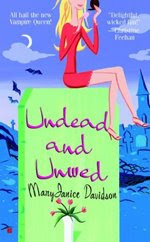 There have been three major shifts in science fiction romance while I've been involved in the subgenre. First was the rise of epublishers. Most epublishers quickly learned that they couldn't compete head-to-head with the big print publishers, and had to make a market by selling the books print publishers wouldn't, but that had devoted and eager readers willing to struggle with the new format to get their fiction fix. This allowed the books to build "buzz" and get picked up by major publishers—MaryJanice Davidson's NY Times bestselling "Queen Betsy" series and Rosemary Laurey's USA Today bestselling English Vampire series are two examples that helped reinvigorate mass market vampire romances.
The second has been the acceptance of romance by the fantasy and science fiction houses. They'd originally feared that being associated with romance would cause their books to lose sales from their core (12-year old boy) audience. Once they realized that being associated with romance actually caused a jump in sales, they embraced cross-genre books wholeheartedly.  And finally, the nature of science fiction is a moving target. For example, Chris Moriarty and Catherine Asaro both wrote excellent books about artificial intelligence that were science fiction at the time—but a recent NY Times science article detailed the ability to comprehensively model a rodent brain in software, and the projected date of when modeling a human brain would be possible. Thirty years from now, books about AIs will be mainstream, not science fiction. Similarly, psychic powers have moved from fantasy to mainstream, as the wider culture accepted and embraced what had been fringe elements.
SF Romances balance on the thin line between when enough is known about a subject to provide sufficient detail for research, and when material has been accepted by the culture at large, and that line is always advancing.
TGE: What advice would you like to share for aspiring science fiction romance authors?
My advice to new writers? Read widely. Read in multiple genres. One of the best time-travel romances I ever read was by someone who'd grown up reading science fiction time-travel stories, and so incorporated those elements into her romance, complete with all of the time-travel paradoxes, rather than the watered-down view of time-travel common in the romances being published at that time.
Find something that truly inspires your writing, rather than trying to write to a trend or market sheet. Figure out what you do better than anyone else, and do it. Try things you aren't familiar with, whether that's subject, format, or style. And for Heaven's sake, do your research!!! That's where some of your best story inspiration will come from, and the details that elevate your book from mediocre to memorable. Not to mention, it lessens the chances of it being flung against a wall with great force by a reader who knows the material you guessed at.
TGE: Is there any news or information about your current project(s) that you’d like to share? My current project is an urban fantasy novella for the latest anthology (not yet titled) from the "Bondage Babes" (Madeleine Oh, Dominique Adair and me). Entitled "Walk-ins Welcome", it involves the paranormal belief that a soul can abandon a body, and another soul can step in to finish the body's lifetime. A magic-broker in the middle of divorcing her husband returns to his side when he's in a critical car accident, and as he recovers, discovers he's literally not the man she married. There's also magicians running amok, rich and well-connected people cheating death, and why insurance companies hate magic. Oh, and a threat to the very fabric of the universe. As well as really hot, steamy sex.
Ms. Dunne, thanks so much for a terrific interview.
Wasn’t that amazing? I am in awe of what the SFR Newsletter team accomplished. If you’re hungry for more, as well as for information about Jennifer Dunne, here are a few related links.
From Speculative Romance Online:
* History of the Sapphire Award
* Jennifer Dunne bids adieu to the newsletter
From around the Web:
* Article about the Sapphire Awards (January 2000)
* PNR interview with Jennifer Dune
* A review of Jennifer Dunne’s science fiction romance RAVEN’S HEART
Joyfully yours,
Heather
Tuesday, May 3, 2011
A Questionnaire For The Sci-Fi Romance Community
After Sharon contacted me, I answered the questions. Once I realized how I involved I’d gotten in my responses (and believe me, I could have easily written a few more pages!), I asked S. for permission to share both his questions and my answers on The Galaxy Express. I thought S.’s questions were good food for thought and figured we could have a stimulating discussion/debate about them.
As S. is seeking upwards of 20-30 responses from a mix of authors and readers, I also thought there’d be a few folks who would be piqued enough to answer some or all of the questions right here in the comment section. Alternately, if you’d like to send S. your answers directly, contact me at sfrgalaxy “at” gmail.com (subject line: questionnaire) and I’ll send you his email.
Below are my responses to the questionnaire. Whether you agree or disagree, I’d love to hear your thoughts and I’m sure S. would, too! Thanks in advance to anyone who participates.
Do you think SFR is primarily a subgenre of science fiction or of romance, an independent genre of its own, or another option I haven’t mentioned?
Wednesday, September 25, 2013
Coming Soon: The Sci-Fi Romance Quarterly
Exciting news! The Sci-Fi Romance Quarterly is a digital magazine devoted to all things science fiction romance. The first issue will launch November 15, 2013. Each edition will cover a three month period.
Saturday, August 1, 2015
SFR News & Links For August 2015
Make your August extra fun with these new sci-fi romances!
